FDE Portfolio Projects That Actually Signal The Role
A good FDE portfolio does not just show that you can build. It shows that you can build around a real workflow, deploy, and make product tradeoffs.
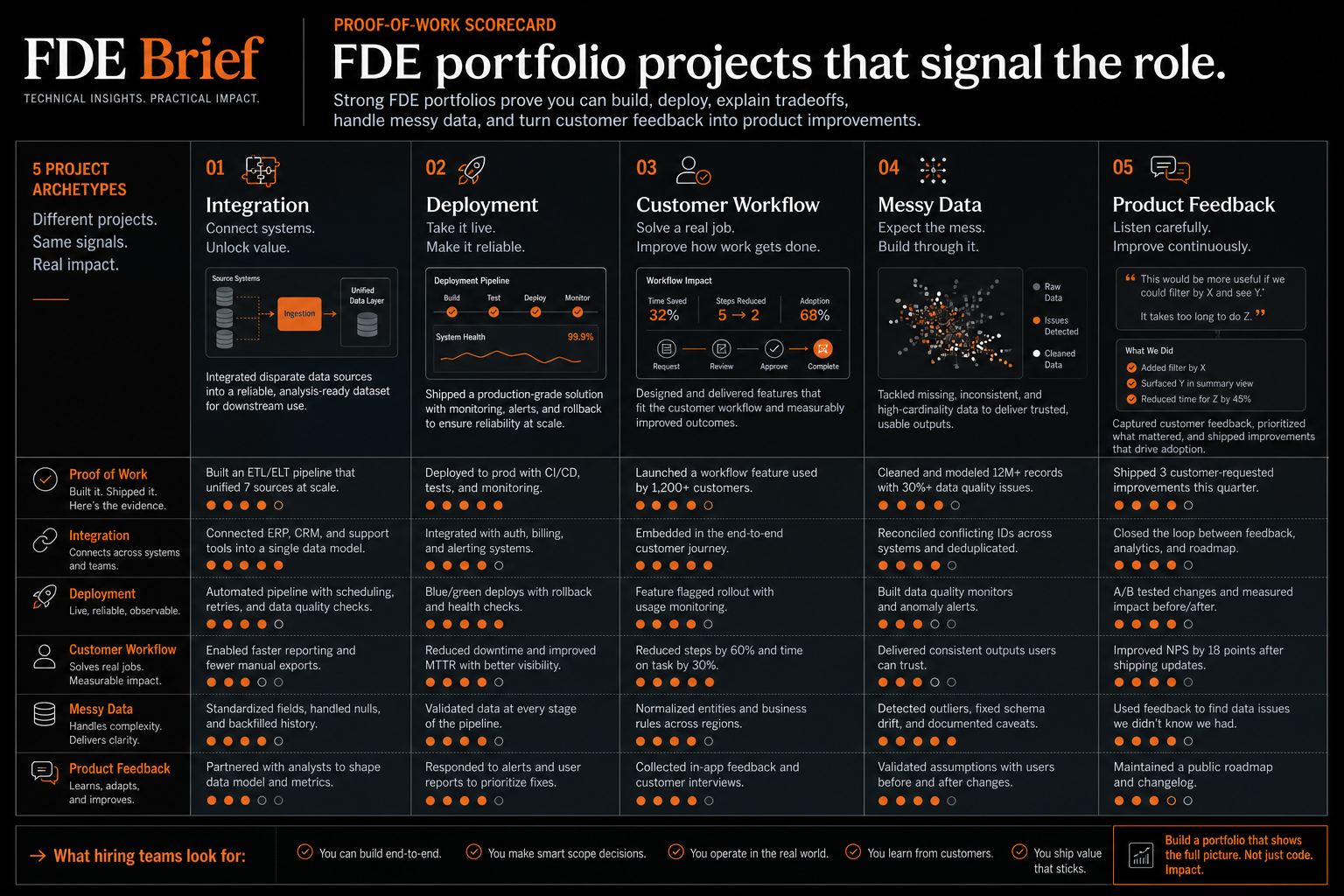
Most portfolios optimize for polish. FDE portfolios should optimize for believable field work: messy inputs, practical integrations, clear deployment, and a written explanation of what you learned from user constraints.
Project Archetypes
- Workflow integration: connect two real tools and automate a painful handoff.
- Messy data app: ingest inconsistent data, normalize it, and expose a useful operator workflow.
- AI deployment assistant: wrap an AI capability in evaluation, guardrails, logging, and user feedback.
- Customer dashboard: build a decision surface that answers a specific operational question.
- Scope memo: explain what you refused to build and why.
What To Include
Include a demo, architecture note, deployment URL, tradeoff memo, user workflow, failure modes, and the next product improvement. The writeup matters because FDE work is judgment-heavy.
Best signal: show the before-and-after workflow. The code is necessary, but the operational improvement is what makes it FDE-shaped.
What To Avoid
Avoid generic chatbots, fake dashboards, and toy CRUD apps with no customer environment. If the project would not survive a real workflow, it will not signal the role.
Use this with the career map, the interview guide, and the AI deployment vs FDE role map to shape your positioning.
Get the next FDE portfolio teardown
Weekly role teardowns, career maps, and field notes for engineers who live at the customer.