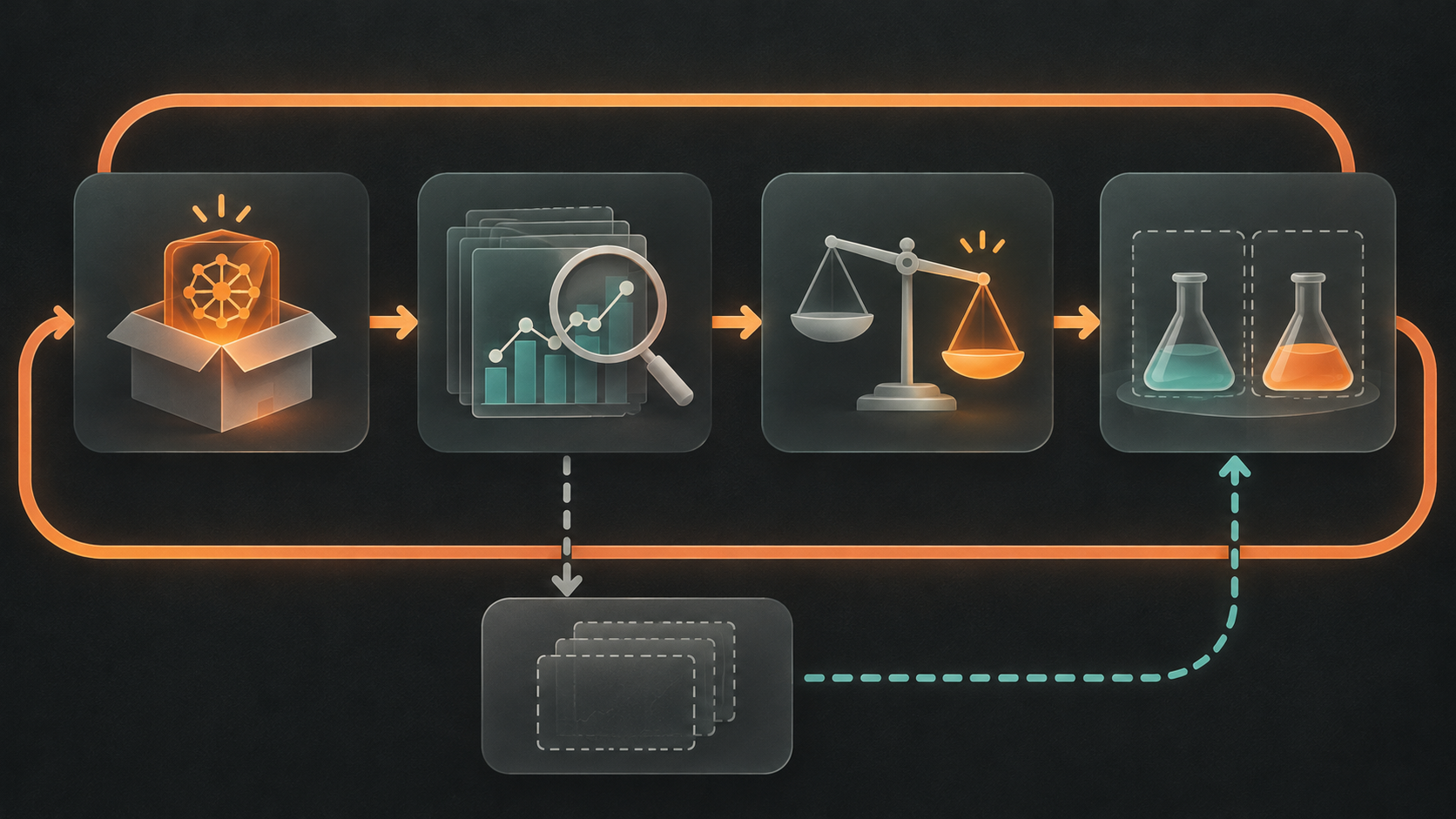
“People used it” is not enough to guide an AI deployment. It does not tell the team whether the workflow helped, where it failed, whether the boundary still holds, or who can change the next release.
Proposed method: keep a short use-to-decision record whenever a team is considering a rollout, scope, ownership, or build-priority change. It is editorial guidance, not a universal measurement standard.
What the source supports—and what it does not
OpenAI’s current NYC FDE role says its engineers own discovery through production rollout and measure success through production adoption, measurable workflow impact, and eval-driven feedback that changes product and model roadmaps. That is a company-specific role description, not evidence that a particular tool was adopted, improved a customer workflow, or should be broadly expanded.
The same listing describes working directly with customer engineering and domain teams, sequencing delivery, and codifying working patterns into reusable tools or playbooks. Those stated responsibilities support the narrow lesson here: a delivery team needs an inspectable record between observed use and the next decision.
The seven fields
| Field | Record | Do not substitute |
|---|---|---|
| Intended workflow | The bounded task, user, and decision the tool was meant to support. | A generic claim that the tool saves time. |
| Observed use | A consented observation, system evidence, or a clearly labeled fictional test. | An assumption that a launch equals adoption. |
| Friction or exception | The point where use stalled, needed help, or left the agreed boundary. | A success-only anecdote. |
| Decision changed | The specific scope, owner, backlog, or release choice affected by the evidence. | A meeting summary with no action. |
| Owner | The person who can make or receive the decision. | A team name without a route. |
| Release limit | What remains intentionally constrained while evidence is incomplete. | An implied permission to expand. |
| Next review | Date, evidence to inspect, and the person who will review it. | An open-ended promise to monitor. |
Use the missing-evidence branch
If there is no consented observation or reliable workflow evidence, write evidence missing. Keep the next action to a controlled test, an instrumentation request, or a customer-approved observation—not a claim that the deployment is succeeding or failing.
Keep the record in the right place
This page starts after the tool is introduced. For deciding what changes before launch, use the evaluation decision record. For the ownership after launch, use the handoff checklist. For field-to-product escalation, use the field-feedback packet.
The FDE Brief
Get practical delivery playbooks.
Get FDE notes on evidence, deployment judgment, and customer-facing technical work.
Reader question
What would change your decision?
What would you need to observe before changing rollout scope, ownership, or the next build priority?